
 #fiction
From Alliance to Isolation: The 72 Hours That Reshaped the World
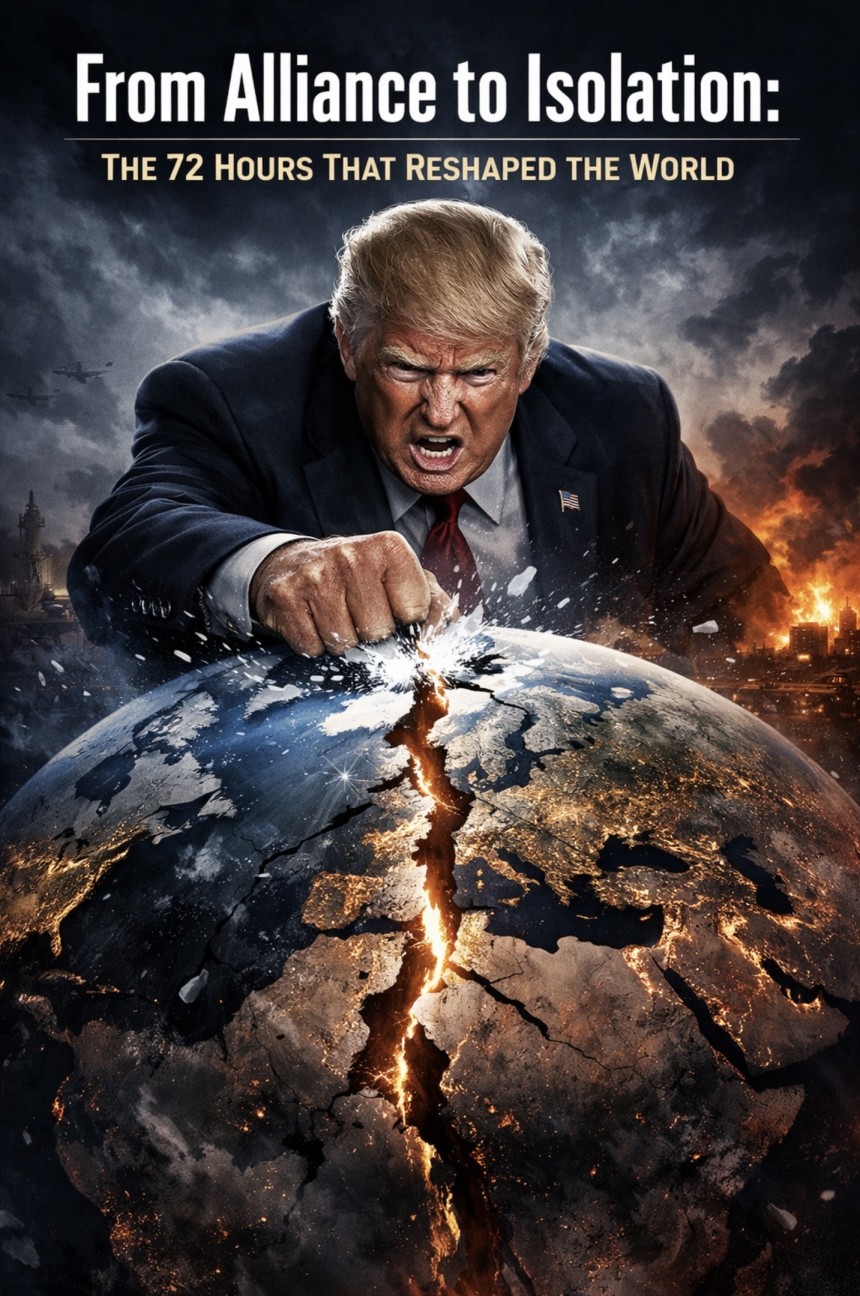
A fractured world symbolises the sudden collapse of global unity as systems fail and alliances
Two weeks before anything went dark, the world had already started to come apart.
It didn’t happen all at once. It came in steps — each one shocking on its own, but somehow still not enough to convince people that the system itself was failing.
First came the announcement that the United States would withdraw from NATO.
For decades, the alliance had been treated as a permanent fixture of global security. Its sudden abandonment wasn’t just political — it left a visible gap in the structure that had underpinned Western defence since the Second World War. European leaders scrambled to respond, holding emergency meetings and issuing carefully worded statements about “continuity” and “stability.”
Days later, the United States formally exited the United Nations.
That was the moment the tone shifted. This wasn’t just a policy change or a negotiation tactic. It was separation. A deliberate step away from the international system itself.
Markets reacted. Diplomats warned of long-term consequences. Analysts debated what it meant.
But for most people, including those in places like Penrith, it was still just news.
Then came the domestic turn.
Within the United States, President Donald Trump declared martial law. Borders were closed. Airspace was shut down. Military units were deployed internally.
Footage showed convoys moving through major cities. Airports emptied. International flights were cancelled mid-route or turned back.
For the first time, there was a sense that this wasn’t just political theatre. Something fundamental had changed inside the world’s most powerful country.
Even then, life in the UK carried on.
People talked about it, of course — in workplaces, in pubs, in passing conversations. But there was still a strong assumption that whatever was happening would stabilise. That there were limits. That there always had been.
There weren’t.
At 13:50 GMT, the next step came.
President Donald Trump ordered all major American technology companies to cease providing services to countries outside the continental United States by 18:00 GMT.
It was a five-hour deadline.
No phased withdrawal. No negotiation window. Just a fixed point in time when a large part of the world’s digital infrastructure would be switched off.
Coverage from BBC News reflected the uncertainty. Early reports questioned whether it could even be enforced. Experts debated legal challenges, technical barriers, and the likelihood of compliance.
But behind the discussion, something more important was becoming clear.
If it did happen, the consequences wouldn’t be abstract.
They would be immediate.
In Penrith, the afternoon felt no different to any other.
The sky was flat and grey. Traffic moved steadily through the town centre. Shops were open, people were working, and most were only half-paying attention to what was unfolding.
It still felt like something happening somewhere else.
That illusion didn’t last long.
By mid-afternoon, small failures started appearing.
Emails wouldn’t send. Cloud-based systems slowed or stopped responding. Workplace platforms disconnected without warning. At first, it looked like a routine outage — frustrating, but familiar.
Then the same issues appeared everywhere at once.
Across Europe, services began degrading in parallel. Payment systems became unreliable. Messaging apps worked intermittently. Businesses found themselves locked out of tools they depended on.
The reporting changed tone.
By 17:30 GMT, there was a countdown on screen.
This wasn’t being stopped.
When 18:00 GMT arrived, there was no dramatic moment — just a steady collapse of everything people had assumed would always be there.
Email disconnected. Cloud storage vanished. Applications failed to authenticate. Websites stopped loading properly, then stopped altogether.
The internet hadn’t disappeared.
But much of what made it function had.
In Penrith, the impact became visible almost immediately.
Card payments began failing in shops. Self-checkouts froze mid-transaction. Staff tried restarting systems that no longer had anything to reconnect to. Some businesses switched to cash. Others closed early.
What had been a geopolitical crisis that morning was now a practical problem on the high street.
That evening, the town felt different.
Not chaotic. Not panicked.
Just uncertain.
People stood outside their homes, talking. In shops and pubs, conversations replaced screens. Radios became the most reliable source of information as online platforms dropped away.
Everyone was asking the same question in different ways:
How much of this is actually gone?
By the following morning, the answer was becoming clear.
The UK still had connectivity, but it had lost access to a huge portion of the infrastructure it relied on — much of it tied to US-based companies that had now complied with the shutdown order.
The effects spread quickly:
Retail shifted toward cash transactions
ATMs saw heavy demand
Businesses struggled to operate without access to core systems
Supply chains slowed as coordination tools failed
In Penrith, life continued — but with adjustments. People bought what they needed rather than what was convenient. Shops adapted where they could. Workarounds emerged, but none replaced what had been lost.
Seventy-two hours later, the shock had worn off.
What remained was something more serious.
Acceptance.
The systems weren’t coming back — at least not in the form people were used to. Governments across Europe began focusing on replacement rather than restoration. Emergency coordination between the UK and EU intensified.
The United States remained closed, both physically and digitally.
And the world, for the first time in decades, was no longer operating as a single connected system.
Looking back, those first 72 hours were not the collapse.
They were the beginning.
At the time, in places like Penrith, it felt like a disruption — something difficult, but temporary.
It wasn’t.
It was the moment the global system fractured.
Everything that followed — the alliances, the escalation, and eventually the conflict — started there, in a quiet afternoon when most people assumed the world would keep working as it always had.
And then watched it stop