
 #innovation
Time for the UK to look to the future with Hyperloop
not remain stuck in the past with HS2
The concept of the Hyperloop was first introduced in 2013 by Elon Musk, the founder of SpaceX and Tesla. Since then, it has captured the imagination of many people and has been touted as a game-changer in the transportation industry. In the UK, the government has been planning to build the HS2 (High-Speed 2) railway to connect London with Birmingham, Manchester, and Leeds. However, many people have criticized the project for its cost and environmental impact. In this article, we will explore how building a Hyperloop in place of HS2 could speed up travel time and cut costs in the UK, with a focus on a hypothetical Hyperloop build between London and Glasgow, with stations at Birmingham, Leeds, and Carlisle.
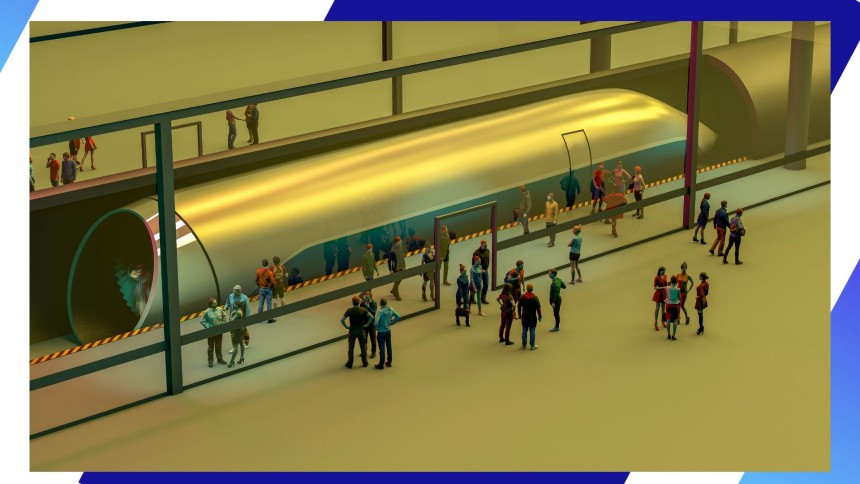
The Hyperloop is a futuristic mode of transportation that uses a system of tubes to transport passengers and goods at high speeds. The system works by propelling pods through a vacuum tube using magnets, eliminating air resistance and friction. This technology could potentially allow for travel speeds of up to 700 mph, which is more than twice the speed of a commercial airplane. In addition to its speed, the Hyperloop is also touted as an environmentally friendly mode of transportation, as it produces zero emissions.
Compared to the HS2, which has an estimated cost of £100 billion, the Hyperloop is a more cost-effective option. The estimated cost of building a Hyperloop between London and Glasgow with stations at Birmingham, Leeds, and Carlisle is around £25 billion, which is significantly less than the cost of HS2. This cost-saving is due to the fact that the Hyperloop requires less land to build, and the construction process is much simpler and quicker.
The Hyperloop would also significantly reduce travel time between London and Glasgow. Currently, it takes around 4 hours and 30 minutes to travel by train between the two cities. However, with the Hyperloop, this travel time could be reduced to just 45 minutes. This would not only benefit commuters but also businesses that rely on transportation to move goods and services.
In addition to the benefits of the Hyperloop, there are also concerns about its feasibility. Some experts have questioned whether the technology is safe and whether it can be scaled up to accommodate large numbers of passengers. However, there have been successful test runs of the Hyperloop in various countries, including the United States and the United Arab Emirates. Moreover, the technology has the potential to be scaled up to transport thousands of passengers per hour, making it a viable option for mass transportation.
Another concern about the Hyperloop is its environmental impact. While the Hyperloop produces zero emissions during operation, the construction process could have a significant environmental impact. However, the construction of the Hyperloop would still have a smaller environmental footprint compared to HS2, as it requires less land and materials.
In conclusion, building a Hyperloop between London and Glasgow, with stations at Birmingham, Leeds, and Carlisle, could be a game-changer for the UK transportation industry. Not only would it significantly reduce travel time and costs, but it would also be an environmentally friendly mode of transportation. While there are still concerns about the feasibility and environmental impact of the Hyperloop, it has the potential to revolutionize the way we travel and could be a viable alternative to the HS2 project.



The Silent Village - Unveiling the Shadows From Liberal Promises to To...